Enter your land dimensions to estimate
ground-mounted solar capacity.
The Freedom of Ground Mounts
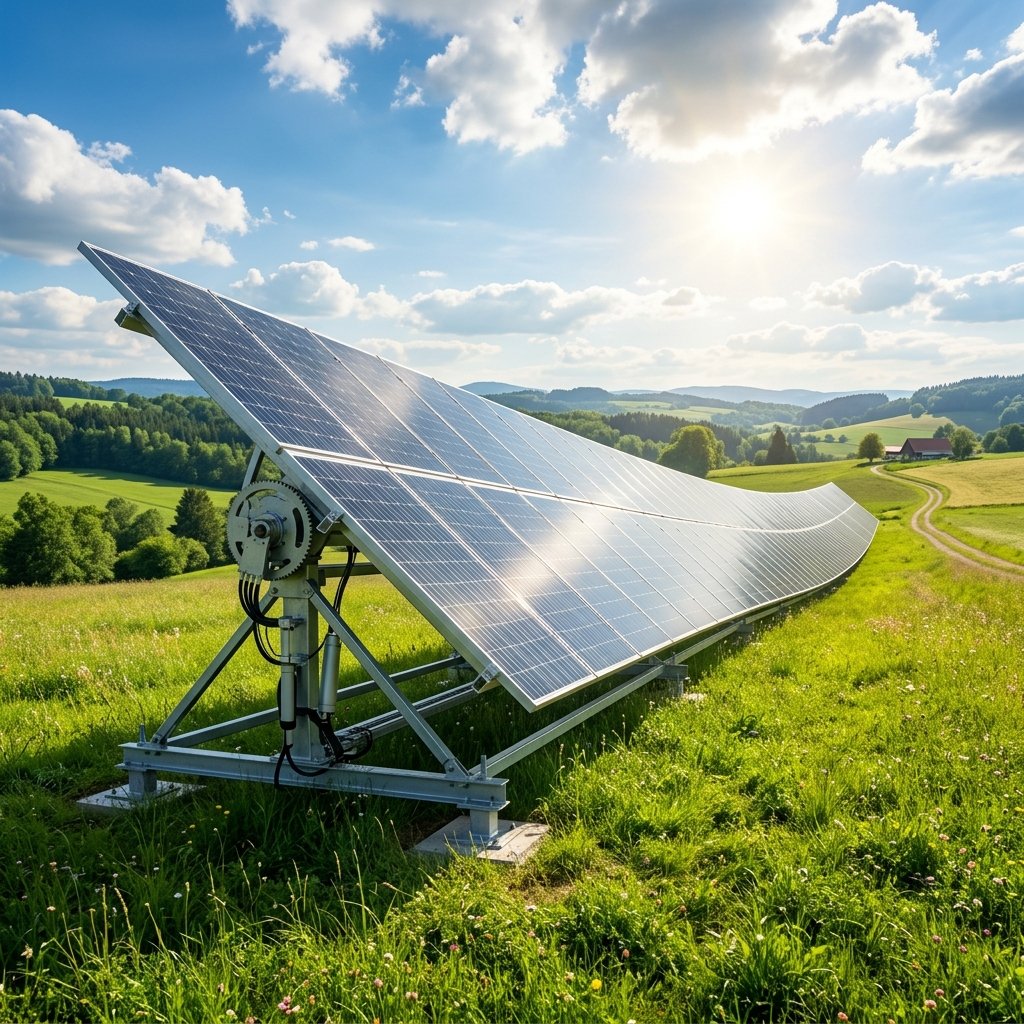
When roof space isn't viable or sufficient, ground-mounted systems offer unparalleled performance. They are free from the constraints of your roof's pitch or orientation, allowing for perfect optimization.
Optimal Placement & Alignment
Face your panels perfectly South at the exact ideal angle for your latitude. This maximizes daily sun exposure, yielding up to 15% more energy than a roof system.
Effortless Maintenance & Cleaning
No climbing required. Ground mounts make cleaning dust or snow off your panels incredibly easy, ensuring your system runs at peak efficiency year-round.
Bifacial Panel Compatibility
Ground mounts are ideal for bifacial solar panels, which generate electricity from both sides by capturing sunlight reflected off the ground underneath.
Pros
- Maximum energy yield per panel through perfect angles
- Better airflow cools panels, boosting efficiency
- Easy to expand system size in the future
- Compatible with single and dual-axis trackers
Cons
- Takes up valuable yard or agricultural space
- Generally more expensive to install due to trenching and foundations
- More visible to neighbors; subject to strict HOA or zoning rules
Land Spacing and Footprint
While a single panel takes up roughly 18-20 square feet, ground-mounted systems require significantly more total land area. This is because rows must be spaced far enough apart to prevent them from casting long shadows on the row directly behind them during winter months.
A good rule of thumb is the Ground Coverage Ratio (GCR), which dictates that you should only use about 40-60% of your total land footprint for actual solar panels.