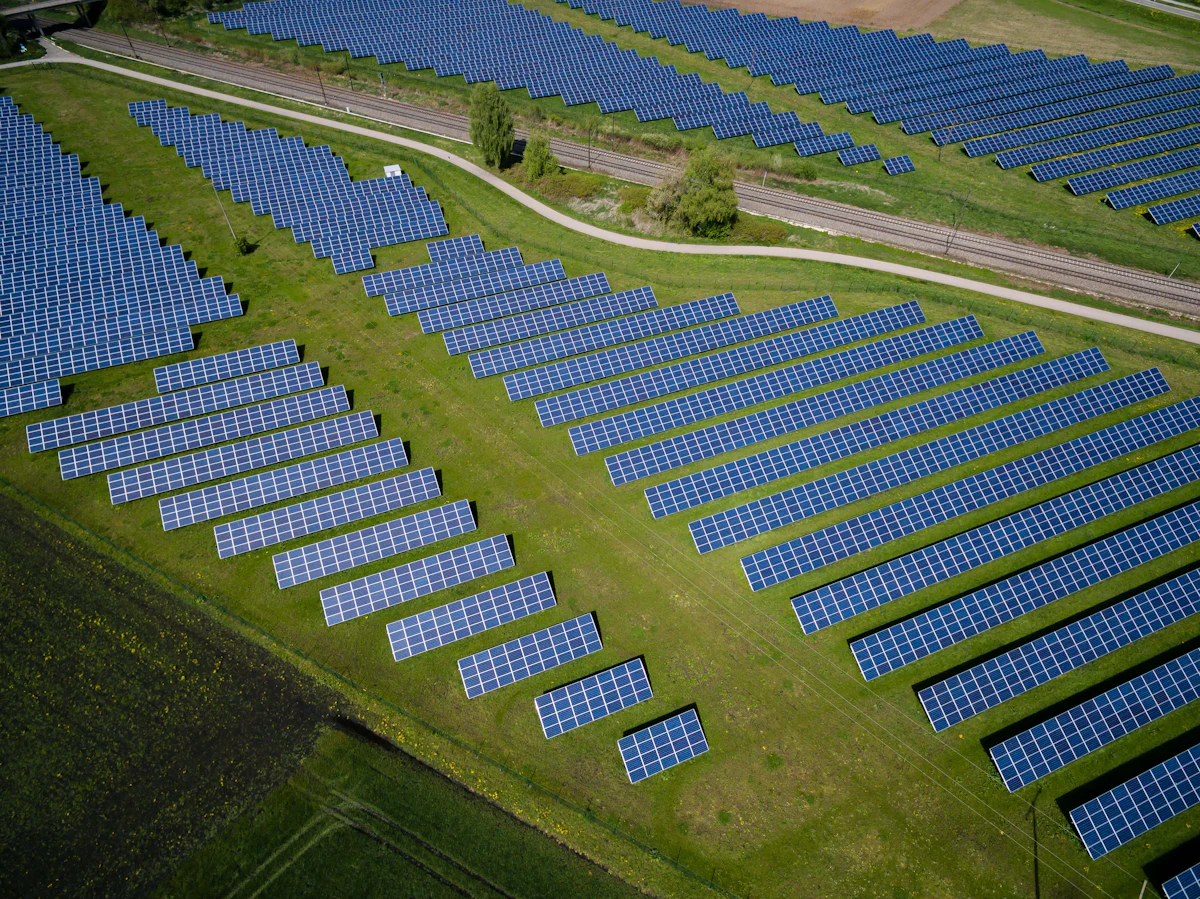
Corporate sustainability is no longer a voluntary differentiator — it has become a boardroom imperative, shaped by investor demands, customer expectations, regulatory requirements, and the growing recognition that environmental risk is financial risk. At the center of most corporate sustainability strategies sits a deceptively simple challenge: how to reduce the carbon footprint of business operations in ways that are verifiable, credible, and financially rational. Solar energy — specifically, on-site solar generation and renewable energy procurement — addresses this challenge more directly and more measurably than almost any other sustainability action a business can take.
This article examines how solar energy investments connect to the major frameworks and goals that drive corporate sustainability strategy, from ESG reporting and Scope emissions accounting to Science-Based Targets, RE100 commitments, and net zero pledges — and provides practical guidance for sustainability officers and business leaders integrating solar into their sustainability roadmaps.
Solar Energy and Scope 2 Emissions Reduction
The GHG Protocol — the global standard for corporate greenhouse gas accounting — classifies electricity consumption as a Scope 2 emission: an indirect emission from purchased energy. Scope 2 emissions represent the single largest and most actionable carbon reduction lever for most commercial and industrial businesses, often accounting for 40–70% of total organizational carbon footprint. On-site solar generation directly reduces Scope 2 emissions by displacing grid electricity purchases with zero-carbon generation. Under market-based Scope 2 accounting, companies that purchase electricity through a PPA with bundled RECs or own the solar generation on-site can report zero carbon intensity for that portion of their electricity supply — a concrete, auditable reduction that holds up under GHG Protocol scrutiny.
Science-Based Targets and Solar Alignment
Science-Based Targets (SBTs), validated by the Science Based Targets initiative (SBTi), require companies to set emission reduction targets consistent with limiting global warming to 1.5°C above pre-industrial levels. For most companies, SBT pathways require 50–70% absolute reductions in Scope 1 and 2 emissions by 2030, with near-zero targets by 2050. Solar energy is among the few technologies that can deliver the magnitude of Scope 2 reductions required by SBT pathways in the near term, at the scale necessary to move the needle on corporate carbon trajectories. Companies that have set SBTs consistently identify renewable energy — led by solar — as their highest-priority near-term decarbonization action.
RE100 and 100% Renewable Electricity Commitments
RE100 is a global corporate initiative bringing together businesses committed to 100% renewable electricity. With over 400 member companies representing some of the world's most recognized brands, RE100 has established renewable electricity procurement as a mainstream corporate commitment rather than a fringe aspiration. On-site solar generation is explicitly recognized under RE100's technical criteria as a qualifying renewable electricity source — and often the most credible one, as it represents physical generation rather than certificate-based claims. Businesses pursuing RE100 membership or aspiring to 100% renewable electricity claims typically anchor their strategy around on-site solar (for direct generation) supplemented by PPAs with bundled RECs (to cover remaining consumption).
| Sustainability Framework | Solar's Contribution | Reporting Benefit |
|---|---|---|
| GHG Protocol Scope 2 | Reduces market-based and location-based Scope 2 emissions | Auditable, quantifiable carbon reduction |
| Science-Based Targets (SBTi) | Delivers near-term Scope 2 reduction aligned with 1.5°C pathways | Demonstrates credible decarbonization progress |
| RE100 | On-site solar qualifies as renewable electricity generation | Supports 100% renewable electricity claims |
| CDP Climate Disclosure | Renewable energy investment improves scoring | Higher CDP scores attract ESG-oriented investors |
| TCFD / SEC Climate Disclosure | Solar reduces physical and transition climate risk exposure | Demonstrates active risk management to regulators |
| Net Zero Commitments | On-site solar is a primary near-term decarbonization lever | Verifiable progress toward net zero milestones |
ESG Ratings and Investor Relations
Environmental, Social, and Governance (ESG) ratings — produced by agencies including MSCI, Sustainalytics, ISS ESG, and others — increasingly weight carbon footprint and renewable energy adoption in their environmental scoring methodologies. Companies with documented renewable energy programs consistently score higher on environmental dimensions of ESG ratings than equivalent peers without such programs. For publicly traded companies and large private companies that interface with institutional investors, improved ESG ratings directly influence cost of capital: ESG-screened investment mandates now represent trillions of dollars in assets under management, and companies that cannot demonstrate credible sustainability progress face increasing exclusion from ESG-aligned investment portfolios.
Communicating Solar Impact to Stakeholders
The sustainability value of a solar installation is only as powerful as the communication strategy that surrounds it. Businesses should translate solar performance data into stakeholder-relevant metrics: equivalent cars removed from the road, homes powered annually, trees planted equivalents, and cumulative CO₂e avoided. These equivalencies — reported annually in sustainability reports, integrated into CDP disclosures, and featured in customer and employee communications — make abstract carbon accounting tangible and shareable. Importantly, sustainability communications around solar should be specific and verifiable: vague claims of "commitment to sustainability" are increasingly scrutinized for greenwashing, while specific, data-backed claims about solar generation, verified RECs, and audited Scope 2 reductions are credible and defensible.
- Establish a GHG inventory baseline using the GHG Protocol before setting solar-related reduction targets
- Align solar procurement with market-based Scope 2 accounting using bundled RECs or PPAs
- Validate renewable energy claims through credible third-party certification (I-RECs, GOs, or Green-e)
- Set Science-Based Targets to anchor renewable energy commitments in credible carbon science
- Report solar generation data in CDP, GRI, or SASB sustainability disclosures annually
- Integrate solar impact metrics into investor relations materials and annual reports
- Communicate specific, verifiable sustainability achievements — not general aspiration statements